
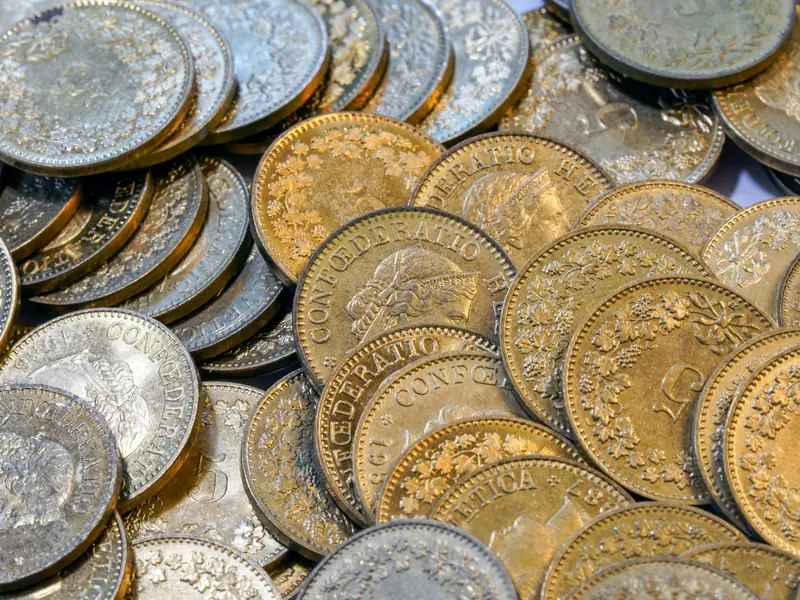
Short answer: almost never. For coins with any collector value, cleaning usually lowers what they're worth, sometimes by half or more. Collectors and grading services can spot cleaning, and many graded slabs carry a "cleaned" or "details" notation that buyers discount heavily.
But it's one of the most argued-about topics in the hobby, so let's look at why, and at the narrow cases where people disagree.
Why cleaning hurts value
A coin's surface is part of its value. Freshly struck coins have "luster," a microscopic flow pattern from the minting process that reflects light in a distinctive way. Over decades, coins also develop toning, a natural color change from slow chemical reactions with the air and storage materials.
Cleaning, even gentle cleaning, tends to:
- Remove or disturb luster. Rubbing with a cloth, polish or even a toothbrush leaves fine hairline scratches visible under magnification.
- Strip toning. Some toning is considered attractive and adds value. Once removed, it's gone.
- Leave an unnatural look. Dipped or polished coins often look too bright or "washed out," which experienced buyers recognize immediately.
Grading services may decline to give a numerical grade to a cleaned coin, instead labeling it with a "details" grade. Those coins usually sell for noticeably less than problem-free examples of the same type.
"But it looks so dirty"
That's the most common reason people clean, and it's understandable. A dark, crusty coin from a jar doesn't look like treasure. But to many collectors, original surfaces, even dull ones, are preferable to bright, damaged ones. A buyer can always decide to clean a coin; nobody can un-clean it.
Where people disagree (the debate)
This is where collectors argue, and it's worth knowing both sides:
1. Professional conservation. Grading companies offer conservation services that remove harmful residues (like PVC film or active corrosion) using controlled methods. Many collectors view this as acceptable and different from "cleaning." Others say any intervention is cleaning by another name.
2. Ancient coins. Excavated ancient coins often arrive encrusted with dirt and must be cleaned to be identified at all. In that market, careful cleaning is normal.
3. Bulk, low-value coins. For common pocket change or bullion valued only for metal, cleaning doesn't change much financially. Even then, many collectors say: why bother?
4. Removing loose dirt. Some collectors think a gentle soak in distilled water to remove loose surface grime is harmless. Others warn that even this can cause problems if followed by rubbing or improper drying.
Where do you stand? It's one of the few hobby questions where reasonable experts genuinely disagree on the edges, but they agree almost completely on the center: don't scrub, polish or dip a coin that might be valuable.
What to do instead
- Leave it alone until you know what it is and roughly what it's worth.
- Store it properly: inert holders, low humidity, no PVC-based flips for long-term storage. (Florida humidity makes this especially important.)
- Get it looked at. If a coin has something on it that seems to be actively damaging it (green spots, sticky residue), ask an experienced evaluator or a grading service about conservation.
- Photograph it as-is. Good photos often reveal more than you'd expect, even under grime.
Signs a coin has already been cleaned
If you've inherited coins, some may have been cleaned decades ago. Look for:
- Fine parallel scratches in the fields (the flat background)
- An unnaturally bright or uniform shine
- Toning only in protected areas, with bright high points
- Residue in crevices around letters
This doesn't make a coin worthless; it just affects how it's valued.
FAQ
Does cleaning ever increase value? Rarely for collectible coins. Professional conservation can help in specific cases where a harmful substance is present.
Can I use vinegar, baking soda or silver polish? These are commonly suggested online and are exactly what damages coins. Avoid them for anything you're not sure is worthless.
What about soap and water? Even mild soap followed by rubbing or towel-drying can leave hairlines. When in doubt, don't.
Will a grading service grade a cleaned coin? They may authenticate it but assign a "details" designation instead of a straight numerical grade.
My coin has green spots. What now? That can be corrosion or PVC residue. Don't scrub it. Ask an expert about conservation options.
Next steps
- 🔎 Not sure if a coin's been cleaned, or if it's worth saving? Request a no-cost evaluation with photos. → Request a free evaluation
- 📘 Inherited a whole collection? The Inherited Coin Guide covers handling, storage and selling. → Get the guide on Gumroad
- Related: Raw vs. Graded in 2026: Is Grading Still Worth It? · Inherited a Coin Collection? Your First 7 Days
Educational content only. Choice Custom Collections, Palm Beach County, by appointment.
Have a coin you're curious about? Use our What's my coin worth? form to send a few photos and request an offer or a rough sense of value.
Keep track of what you own. Create a free collection account to catalog your pieces in one private place.
Want more articles like this? Get Choice Cuts, our newsletter (you can unsubscribe anytime).